Systems-architecture blueprints
At the architect tier the proof that converts is not a code repo, it is the systems thinking: the diagram shows the what, the decisions show the judgment. Each blueprint documents architectural mastery over the end-to-end AI lifecycle.
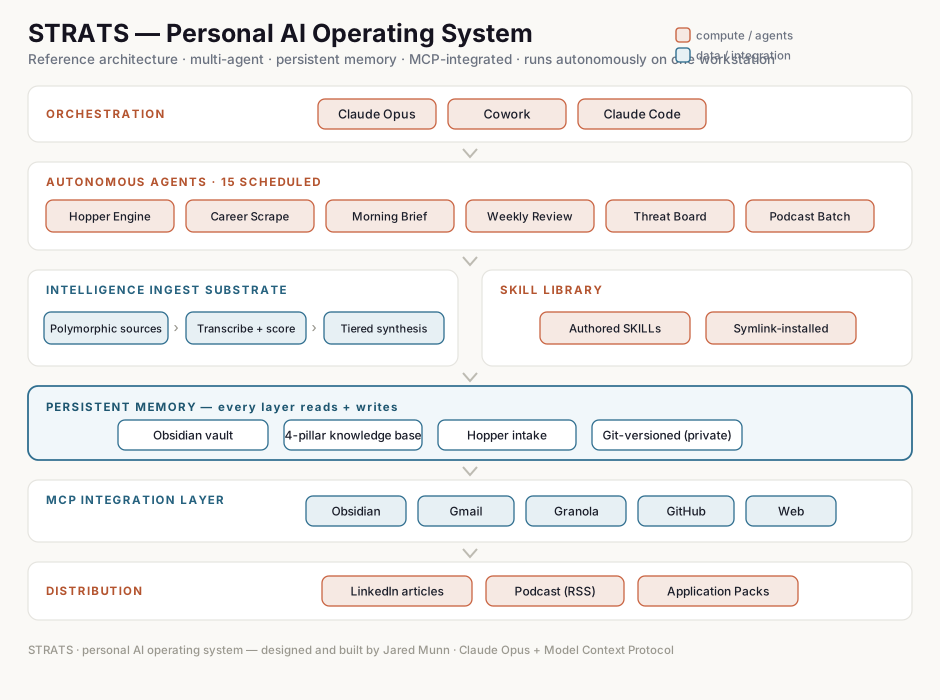
STRATS — Personal AI Operating System
A multi-agent, MCP-integrated system with persistent memory running autonomously on one workstation. Persistent versioned memory as the spine, fifteen idempotent scheduled agents, and MCP-mediated tool access. The same pattern that scales to enterprise deployment.
AutoResearch — Autonomous Research Loop
An iterate, score, revert loop that runs research autonomously and attributes every discard. v1: 5 iterations, 6 of 6 success criteria met, 4 discards each with a distinct attribution finding.
Intelligence Ingest Substrate
One source-registry interface ingests heterogeneous sources (RSS, video), transcribes locally, scores relevance, and promotes the best material through tiered LLM synthesis. Adding a source type is a registry entry, not a rewrite.
MCP Integration Map
Foundation models reach Obsidian, Gmail (read-only, scoped), Granola, GitHub, and the web through typed, permissioned MCP tools, not bespoke API glue. The exact competency enterprises need to connect models to existing systems safely.
Agentic Evaluation Matrix
How autonomous runs are scored, gated, and verified, so unattended agents verify their own writes and never silently corrupt the store.
Tradeoff Table
Build vs buy, RAG vs fine-tune, orchestration vs code. The decisions an architect is paid to make, with the criteria named.